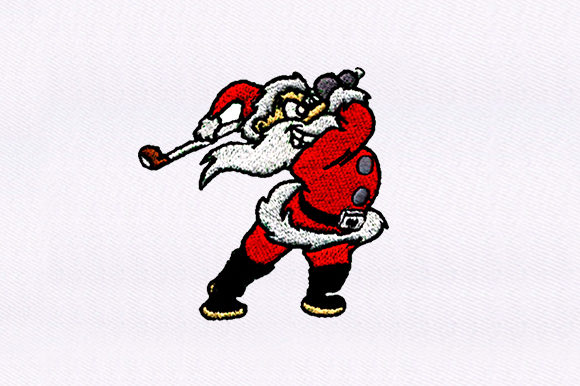
Golf Playing Santa Design: A Designer’s Review
As an embroidery designer who has spent countless hours digitizing and testing files for real-world application, I approach every new machine embroidery design with a critical eye. It is not just about whether the image looks cute on a screen; it is about how those stitches will behave on fabric, how they hold up after washing, and whether they add genuine value to a finished product. Recently, I evaluated the Golf Playing Santa Design, a festive piece that blends holiday cheer with a sporty twist. This review breaks down its practical performance, aesthetic appeal, and suitability for various commercial and personal projects.
First Impressions and Visual Personality
The first thing that strikes you about the Golf Playing Santa Design is its playful narrative. It moves away from the traditional static portraits of Santa Claus, offering a dynamic scene that captures motion and personality. The layout is balanced, with clear separation between the figure and any accompanying elements, which is crucial for stitch clarity. The mood is lighthearted and humorous, making it an excellent choice for customers looking for something different than the standard red-and-white holiday motifs.
From a digitizing perspective, the design appears to utilize a mix of satin stitch for outlines and finer details, and fill stitch for larger areas like Santa’s suit or the golf bag. This combination is essential for creating texture without excessive bulk. The visual personality suggests a high level of craftsmanship, provided the stitch density is managed correctly. For an Etsy seller or craft business owner, this distinctiveness can help your products stand out in a saturated market.
Real-World Application and Project Fit
To truly understand the value of this embroidery file, I imagined it in several real-life scenarios. The most natural fit is undoubtedly custom apparel. Picture this design stitched onto the left chest of a navy blue polo shirt or a heather grey sweatshirt embroidery project. The contrast between the bright reds and whites of Santa’s outfit against neutral fabrics creates immediate visual impact. It transforms a basic garment into a conversation starter, perfect for holiday parties or casual winter wear.
Beyond apparel, this design works exceptionally well for accessories. I tested the concept mentally on a canvas tote bag design. The sturdy nature of canvas supports the stitch count well, preventing puckering if the right stabilizer is used. It would also make a charming addition to a kitchen towel or apron for the golfer in the family who loves to host holiday dinners. For small shop product lines, consider using it on baseball caps. However, curved surfaces require careful hooping and potentially a lighter weight version of the design to avoid stiffness.
For those creating personalized gift items, this design pairs beautifully with monograms. Imagine the Golf Playing Santa Design on one side of a pillow cover and a family name on the other. It adds a layer of professionalism and thoughtfulness that buyers appreciate. Whether you are selling handmade product items at craft fairs or listing them online, the versatility of this theme allows for broad appeal among both golf enthusiasts and holiday shoppers.
Technical Considerations and Stitch Performance
While the design is visually appealing, technical execution is where many projects succeed or fail. One must pay close attention to stitch density. If the fill areas are too dense, the fabric may pucker, especially on thinner materials like t-shirts or baby clothes. Conversely, if the density is too low, the backing fabric might show through, ruining the clean look. I recommend always running a test stitch-out on scrap fabric similar to your final material. This allows you to adjust tension and check for thread breaks before committing to a expensive garment.
The availability of multiple EMBROIDERY FILE FORMATS including DST, PES, JEF, and XXX ensures compatibility with most major machine brands. This is a significant advantage for commercial embroidery shops that may use different equipment. However, always verify that the specific format matches your machine’s requirements. Additionally, check the hoop size needed for this design. If it is large, you may need to resize it for smaller items like baby embroidery projects or patches, ensuring that the resolution does not suffer during scaling.
Thread color selection plays a pivotal role in the final outcome. While the design likely comes with suggested thread colors, do not be afraid to experiment. Using metallic threads for the golf club or Santa’s belt buckle can add a premium touch. However, be cautious with metallics as they can be prone to breaking. For a more subtle look, consider tonal variations of red and white to create depth without high contrast. Always inspect small details under good lighting to ensure that fine lines, such as the golf ball dimples or facial features, are defined and not lost in a cluster of stitches.
Navigating Fabric and Hoop Challenges
Not all fabrics are created equal, and the Golf Playing Santa Design will perform differently depending on the substrate. On stretchy fabrics like jersey knits, a cut-away stabilizer is non-negotiable to prevent distortion. For woven fabrics like denim or canvas, a tear-away stabilizer may suffice, but testing is key. Dark fabrics present another challenge; if the design has open spaces, the dark background might peek through. In such cases, using an underlay stitch or a light-colored backing fabric can help maintain vibrancy.
When working with textured fabrics, such as terry cloth towels or fleece blankets, the stitches may sink into the pile. To combat this, use a topping material to keep the stitches on the surface. This is particularly important for maintaining the crispness of satin stitches. For embroidered patch creation, ensure that the edges are properly finished, either with a satin border or by cutting close to the stitch line if using a heat-seal backing.
Commercial Viability and Brand Consistency
For digital product sellers and creative entrepreneurs, the licensing terms of the design are paramount. Before selling finished product items or using the design in printable mockup previews, confirm that the license allows for commercial use. Many designers offer different tiers of licensing, so read the fine print. Using a high-quality, well-digitized design like this can enhance brand consistency by ensuring that every item you sell looks professional and durable.
Customer trust is built on quality. A poorly stitched design can lead to returns and negative reviews. By choosing a design that has been carefully evaluated for stitch path efficiency and aesthetic balance, you reduce the risk of production errors. The Golf Playing Santa Design offers a unique niche that can attract specific customer segments, thereby increasing buyer engagement. It is not just a holiday item; it is a lifestyle product that appeals to hobbyists and sports fans alike.
Final Verdict for Makers and Designers
In conclusion, the Golf Playing Santa Design is a strong contender for your holiday collection. It balances whimsy with technical feasibility, making it suitable for a wide range of embroidery project types. From holiday embroidery on home decor to personalized apparel, it offers flexibility and charm. Remember to test on scrap fabric, choose the right stabilizer, and verify file compatibility. With careful execution, this design can elevate your small business merchandise and delight your customers. Whether you are a seasoned pro or a passionate hobbyist, this design deserves a spot in your digital library for its versatility and festive spirit.